Buy a Pallet: Smart Business Purchasing Strategies

From pricing and grades to bulk buying and recycling — everything Monmouth County businesses need to know before buying a pallet.

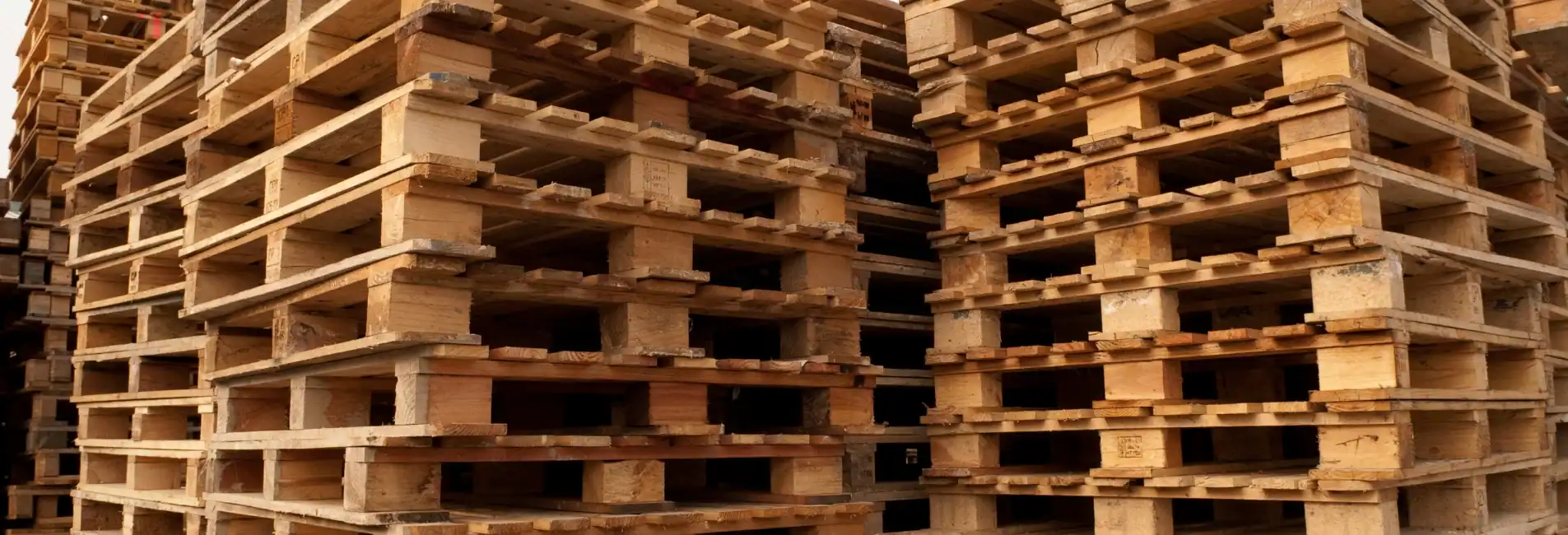
Pallets for construction and shipping, stacked on a flatbed truck.

Most businesses don’t think about pallets until something goes wrong. The supplier runs dry. The price jumps without warning. Used pallets pile up in a corner and nobody knows who to call. If any of that sounds familiar, you’re not alone — it’s one of the most common operational headaches in warehousing, distribution, and light manufacturing.

This guide is here to change that. We’ll walk through how to buy a pallet the right way — what to look for, what questions to ask, how pricing actually works, and what a reliable local supplier relationship looks like for businesses in Monmouth County, NJ. By the end, you’ll have a clearer picture of the full process, not just the transaction.

Pallets of Wood for Sale: What You're Actually Choosing Between

Walk into any pallet yard and you’ll find more variety than you’d expect. New pallets, used pallets, repaired pallets, custom-built pallets — and within each category, different grades, sizes, and construction types that affect price, load capacity, and how long they’ll hold up under your specific conditions.

The most common standard is the 48″x40″ GMA spec pallet, which works across most supply chains and is required by many major retailers for inbound shipments. But that’s just the starting point. Depending on what you’re shipping, how it’s being stored, and where it’s going, the right pallet might look quite different from the default.

Understanding what you’re choosing between before you place an order saves money and prevents problems downstream — especially if your products are going into regulated environments like food service, pharmaceuticals, or export shipping.

What Is a Black Pallet and When Does It Make Sense?

The term “black pallet” comes up often enough that it’s worth addressing directly, because it means different things in different contexts and the confusion can lead buyers in the wrong direction.

In most commercial settings, black pallets refer to plastic pallets — typically injection-molded or thermoformed, and almost always black or dark gray in color. They’re more durable than wood over repeated use cycles, easier to clean, and resistant to moisture and pests. That makes them a reasonable choice for food-grade environments, pharmaceutical applications, or any setting where hygiene standards are strict and pallets are being reused many times over. The tradeoff is cost — plastic pallets run significantly more per unit than wood, often $40–$80 or more compared to $5–$25 for wood depending on grade.

In other contexts, “black pallet” refers to heat-treated or chemically treated wood pallets that have darkened during the treatment process, or to pooled pallets from specific programs that use color-coding to track ownership. CHEP, for example, uses blue. Other pooling systems use different colors. If you’re receiving pallets from a supplier who participates in a pooled pallet program, you may be required to return those pallets rather than keep or resell them — something worth confirming before you assume ownership.

For most Monmouth County businesses running standard warehouse or distribution operations, wood pallets remain the practical and cost-effective choice. They handle the same loads, meet the same spec requirements, and when sourced from a supplier who grades and inspects them properly, they perform reliably. The cases where plastic or specialty pallets make clear sense are specific — and a good supplier will tell you honestly whether your application is one of them.

New Pallet Wood for Sale: When Buying New Actually Makes Sense

New pallets aren’t always the right call, but there are situations where they’re the only call. Export shipments are the clearest example. Any wood pallet crossing an international border needs to be ISPM-15 compliant — meaning the wood has been heat-treated to a specific internal temperature to kill pests and pathogens. That treatment is required by 183 countries and enforced at customs. If your pallets aren’t marked with the international wheat-sheaf symbol and the HT designation, your shipment can be held, rejected, or returned at significant cost.

For businesses near Port Newark-Elizabeth — which is roughly 35 to 40 miles north of Monmouth County via the Turnpike or Parkway — this isn’t a theoretical concern. It’s a practical one that comes up on every outbound international shipment. New, certified pallets eliminate that risk entirely.

Food-grade and pharmaceutical applications are another area where new pallets are often the right choice. Used pallets, even well-graded ones, carry some history. They may have been in contact with chemicals, industrial materials, or environments that leave no visible trace but create compliance concerns in regulated industries. When your products have strict contamination standards, starting with virgin wood is the cleaner answer.

That said, for the majority of domestic warehousing, manufacturing, and distribution applications in Monmouth County, professionally graded used pallets perform just as well as new ones at 40 to 60 percent less cost. The key word is “professionally graded.” Buying random used pallets from an unvetted source is a different proposition entirely — inconsistent quality, unknown load history, and no accountability if something fails. When you’re sourcing used pallets from a supplier who inspects and grades every unit, you’re getting a known quantity, not a gamble.

Want live answers?

Connect with a Pallet Kings expert for fast, friendly support.

Pallet Supply Chain: Why Consistent Local Supply Matters More Than Price Per Unit

Pallet pricing gets most of the attention, but supply consistency is what actually keeps operations running. A pallet that costs $8 and shows up on time is worth more than a pallet that costs $6 from a supplier who runs short in Q4 when every warehouse in the region is competing for inventory.

Wood pallet prices track lumber commodity markets, which means they move — sometimes dramatically. During the 2021 supply chain disruption, new pallet prices rose 40 to 60 percent in some markets within months. Businesses with established local supplier relationships weathered that period far better than those buying on the spot market.

Having a supplier embedded in your region, with visibility into local supply and the flexibility to respond quickly, is a real operational advantage. It’s not just a nice-to-have.

Buying Bulk Pallets: How Volume Purchasing Changes the Math

If your operation moves pallets in consistent volume — whether you’re a distributor along the Route 9 corridor, a manufacturer in the Freehold area, or a logistics operation near the Turnpike Exit 8A cluster — bulk purchasing is where the economics shift meaningfully in your favor.

At the individual unit level, the price difference between buying 10 pallets and buying 500 pallets can be substantial. Buyers purchasing in the 100-plus range can typically negotiate 10 to 20 percent below standard pricing, and at higher volumes, the conversation shifts to things like dedicated inventory allocation, drop trailer service, and priority fulfillment during high-demand periods.

Drop trailers are worth understanding if you haven’t used them before. Rather than scheduling a delivery or pickup around your warehouse’s availability, we place a trailer at your facility. You load it on your timeline, and we swap it out when it’s full. For high-volume operations where pallet turnover is constant and scheduling flexibility is limited, this removes a significant coordination burden. It’s a service typically associated with large national accounts, but we offer it locally because it makes practical sense for the right customers.

Bulk pallet wood for sale pricing also depends on grade. If your application allows for Grade B pallets — minor repairs, all boards intact, suitable for most internal and short-distance use — you can stretch your budget considerably further than buying Grade A across the board. A good supplier will walk you through what grade actually makes sense for your specific use case, rather than defaulting to the highest-margin option. That kind of honest guidance is what a long-term supplier relationship is built on.

Used Pallet Wood for Sale: What the Grading System Actually Tells You

The used pallet market has a grading system that most buyers never get properly explained to them, which leads to either overpaying for Grade A when Grade B would do fine, or buying Grade C for an application that requires more structural integrity than those pallets can provide.

Grade A pallets are the top tier of the used market. All boards are intact, damage is minimal, and they’re suitable for demanding applications — including retail-facing use where appearance matters, heavier loads, or situations where pallets are going through multiple handling cycles. Expect to pay somewhere in the $5 to $12 range per unit depending on size and market conditions.

Grade B pallets have been repaired or show more visible wear, but they’re structurally sound for standard applications. Most internal warehouse use, short-distance shipping, and non-retail supply chain movement falls comfortably within what Grade B pallets can handle. They typically run $3 to $7 per unit and represent strong value for operations where appearance isn’t a factor.

Grade C pallets are economy-tier — significant wear, suitable for one-time use or situations where the pallet is essentially a disposable platform. They’re not appropriate for loads that stress the structure or for any regulated application.

What matters as much as grade is how the grading was done. Pallets graded and inspected by an NWPCA-certified operation follow documented industry standards — not just a visual once-over before loading. We hold NWPCA certification for our repair work, which means our grading and repair processes meet the standards set by the National Wooden Pallet and Container Association. For buyers in Monmouth County whose pallets move through regulated supply chains, that certification is the difference between a supplier you can rely on and one you’re taking a chance on.

Used pallet sales also connect to something most businesses don’t think about until they’re dealing with the problem directly: what to do with the used pallets coming back into your facility. We buy qualifying pallets back. If your operation is currently paying to have pallets hauled away — or worse, letting them stack up because you don’t know what to do with them — that’s a cost you don’t have to carry.

How to Make a Smart Pallet Purchase in Monmouth County, NJ

Buying a pallet is a straightforward transaction. Building a pallet procurement process that doesn’t create problems — inconsistent supply, surprise costs, accumulating waste — takes a bit more thought. The good news is that most of it comes down to choosing the right supplier from the start.

For businesses in Monmouth County, that means finding someone local enough to be accountable, experienced enough to know the difference between a Grade A and a Grade B inspection, and flexible enough to handle your volume whether that’s 20 pallets or 2,000. It also means finding a supplier who handles the full picture — not just selling you pallets, but managing what happens when those pallets come back.

We offer free pickup with no minimums, same-day and next-day availability, and quotes within 24 hours. If you have pallets that qualify for buyback, we pay you for them instead of charging a disposal fee. If you need drop trailers, certified repairs, or help figuring out which grade makes sense for your application, we handle that too. We’re based in Englishtown, right in the heart of Monmouth County — and we’re here Monday through Friday if you want to talk through what your operation actually needs.

Summary:

Buying pallets sounds simple until you’re stuck with the wrong grade, a supplier who can’t deliver on time, or a pile of used pallets you don’t know what to do with. This guide breaks down how pallet procurement actually works — from pricing and quality standards to bulk buying and recycling — so you can make smarter decisions for your operation. Whether you’re sourcing pallets for the first time or looking to tighten up a process that’s been costing you more than it should, the information here is practical, specific, and built for businesses operating in and around Monmouth County, NJ.

Article details:

Share: