Pallet Recycling Strategies for Modern Businesses

Used pallets piling up at your dock? Here's what pallet recycling actually looks like — and how it can put money back in your pocket.

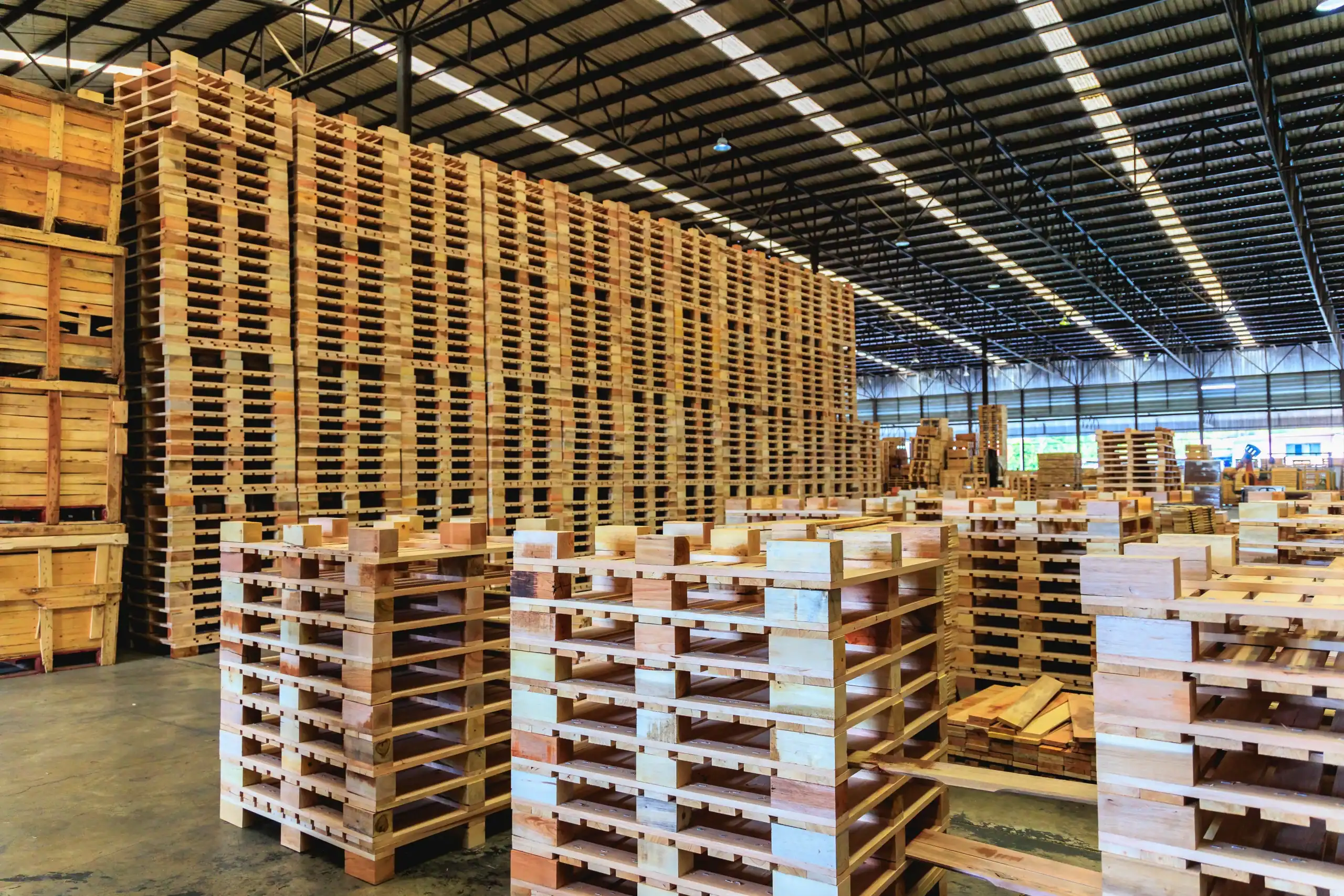
Pallet Kings warehouse with stacked wooden pallets for shipping and storage solutions.

If you run a warehouse, distribution center, or manufacturing operation anywhere in Monmouth County, you already know the pallet problem. They stack up faster than you can move them. They eat dock space you need for actual inventory. And somewhere along the way, someone decided the solution was to pay for disposal — which means you’re spending money to get rid of something that, in many cases, someone else would pay you for.

This page is for the operations manager or business owner who’s done tolerating that. We’ll walk through how pallet recycling actually works, what it costs (and what it pays), and what to look for in a program that actually delivers.

How Pallet Removal Works — and Why Most Businesses Get It Wrong

Pallet removal sounds simple: a truck shows up, pallets disappear. But the difference between a good program and a frustrating one usually comes down to what happens before and after that truck arrives.

The businesses that get the most out of pallet removal are the ones who treat it like a logistics function — not an afterthought. That means knowing your volume, understanding what your pallets are worth by grade, and working with a company that gives you a real quote before the pickup, not a revised number when they’re already at your dock.

Most of the complaints we hear from new customers follow the same script: the last company quoted one price, showed up late, and left with a lower payment than agreed. That’s not a recycling program. That’s a headache with a truck attached.

Wood Pallet Removal: What Actually Happens to Your Pallets After Pickup

When we pick up a load from a facility in Freehold or Howell or along the Route 9 corridor in Monmouth County, the pallets don’t all go to the same place. They get sorted first.

Pallets in solid structural condition — your standard 48×40 GMA pallets with no broken boards and intact stringers — get graded and resold. In the current New Jersey market, Grade A pallets typically fetch $7–$8 each, Grade B around $5–$6, and Grade C closer to $5. If you’re generating 100 of those a month and currently paying a disposal fee, that’s a meaningful swing in the wrong direction.

Pallets that are repairable go through our NWPCA-certified reconditioning process. That certification matters because it means the repairs follow National Wooden Pallet and Container Association standards — the same standards that govern quality across the industry. A properly reconditioned pallet with quality replacement boards often ends up structurally stronger than the original. It’s not a patch job.

What about pallets that are too far gone to repair or resell? Those get broken down into wood byproducts — mulch, biomass fuel, raw material for composite wood manufacturing. Nothing goes to a landfill unless there’s hazardous material contamination, which is handled separately and in compliance with New Jersey environmental regulations. That’s the full lifecycle: collection, sorting, grading, reconditioning or processing, and either resale or responsible end-use. Every step accounted for.

For businesses that ship internationally through Port Newark — and there are plenty of Monmouth County operations that do — we also supply ISPM-15 compliant pallets, kiln-dried to 133°F and properly stamped. That’s not optional when you’re shipping to any of the 130+ countries that require it. A pallet without the right certification stamp can hold up an entire shipment at customs, and that’s a problem no one wants to troubleshoot from a warehouse in Manalapan.

Pallet Recycling Pickup: Scheduling Options That Actually Fit Your Operation

One of the most common friction points in pallet collection is the scheduling itself. Your production schedule doesn’t pause because pallets are stacking up, and coordinating a pickup around shift changes, inbound deliveries, and dock availability is its own project.

We offer a few different pickup structures depending on how your operation runs. Regular scheduled service — weekly, bi-weekly, or monthly — works well for facilities with consistent pallet output. You know when the truck is coming, you plan around it, and the pallets don’t accumulate past a manageable point. On-demand pickup works for businesses with irregular volume or seasonal spikes, which is common along the Shore-area supply chain in Monmouth County when summer retail demand drives up packaging throughput from May through August.

For higher-volume operations, drop trailer service is often the cleanest solution. We leave an empty trailer at your facility. Your team loads it on their own schedule — no coordinating around our truck, no waiting at the dock. When it’s full, one call triggers a swap. It’s the same model that large national distributors use for pallet management, and it’s available to businesses of any size in Monmouth County.

Same-day and next-day pickup is also available for urgent situations. If you’ve got an inspection coming, a shipment arriving that needs the dock clear, or you’ve simply hit a wall with accumulation, we can usually respond within hours. We’re based in Englishtown — not dispatching from a regional hub two counties away — so turnaround is fast. Standard pickups are scheduled within 24–48 hours of your first call or text.

One thing worth saying plainly: free pallet pickup applies to loads that meet the volume threshold, which is generally 50 or more pallets depending on your location within Monmouth County. If you’re generating less than that, we can work with a quarterly storage-and-pickup arrangement so you hit the threshold without paying a trucking fee. Smaller businesses along Route 33 or in the Tinton Falls business parks aren’t excluded — it just takes a slightly different setup.

Want live answers?

Connect with a Pallet Kings expert for fast, friendly support.

Pallets for Free Pickup — What Qualifies and What to Expect

“Free pickup” gets thrown around a lot in this industry. What it actually means varies considerably depending on who you’re talking to.

For us, free pickup means we handle all transportation at no charge when the load qualifies — no trucking fee, no fuel surcharge, no surprise line items on the invoice. For loads of 50 or more standard pallets in Monmouth County, that’s typically the case. The pallets don’t need to be in perfect condition. They need to be accessible and not contaminated with hazardous materials. That’s the honest version of what free pallet removal means in practice.

What you should watch for with any pallet company is whether the “free” offer comes with conditions that only surface when the truck is already at your dock. A quote within 24 hours — and a guarantee that the quoted price is the actual price — is the baseline any serious operation should be able to offer.

Recycling and disposal get used interchangeably, but they’re not the same thing, and the distinction matters for how you think about what you’re sending out the door.

Pallet recycling means the material re-enters some kind of productive use — either as a repaired and resold pallet, or as processed wood that becomes mulch, fuel, or raw material. The pallet, in some form, keeps circulating. Pallet disposal is the broader category. It covers everything that leaves your facility, including material that can’t be recycled and has to be handled as waste. For most businesses, the majority of their used pallets fall into the recycling category — they just don’t know it because no one has ever sorted and graded the load in front of them.

Where disposal becomes the operative word is with pallets that are contaminated — chemical exposure, food safety concerns, or physical damage severe enough that no part of the wood can be safely reprocessed. That material has to be handled according to New Jersey environmental regulations, and it needs to be documented properly so your business isn’t exposed to compliance risk down the line. New Jersey’s NJDEP requirements for wood waste aren’t something you want to navigate on your own, especially if your facility is in a denser commercial area like Tinton Falls or along the Aberdeen–Matawan corridor near the Turnpike.

The practical takeaway: don’t assume your pallets are waste. Let someone sort them first. The proportion of genuinely non-recyclable material in a typical commercial load is much smaller than most businesses expect.

There’s a business case for pallet recycling that has nothing to do with environmental values — it’s just the math of eliminated disposal costs, reclaimed warehouse space, and recovered revenue from qualifying pallets. That case stands on its own.

But there’s a second layer that’s increasingly relevant for Monmouth County businesses that sell to larger retailers, operate within managed supply chains, or have customers who ask about ESG commitments. Pallet recycling is one of the more concrete, documentable sustainability actions a warehouse or distribution operation can take. The wood is renewable. The process diverts material from landfills. The numbers are trackable — volume diverted, CO₂ equivalent avoided, percentage of waste stream recovered.

Circular economy packaging is a phrase that gets used a lot in sustainability reporting, and pallet recycling is a genuine example of it in practice. A pallet gets manufactured, used in the supply chain, returned for reconditioning, and put back into circulation — sometimes multiple times before the wood finally reaches end-of-life and becomes mulch or fuel. That’s the loop working as intended. For businesses that need to demonstrate sustainability metrics to customers, auditors, or internal stakeholders, a documented pallet recycling program gives you something real to point to.

Industrial waste recycling more broadly — managing the wood, packaging, and material byproducts of a commercial operation responsibly — is also increasingly tied to fire code compliance and facility inspections. Pallet accumulation is a documented fire hazard. The NWPCA has specific guidelines around outdoor pallet storage, and fire marshals in densely commercial areas like Freehold Township and Eatontown enforce them. Keeping pallet volume under control through a regular collection program isn’t just good housekeeping. In some cases, it’s the difference between passing an inspection and getting a notice.

Recycled pallet wood for sale also represents a downstream market that keeps the whole system economically viable. When reconditioned pallets re-enter the supply chain, they’re typically priced below new pallets while meeting the same structural standards — which is why businesses that buy pallets and businesses that sell them back are often the same customers at different points in the calendar year.

Pallet Recycling in Monmouth County, NJ — What to Do Next

If you’ve been paying to dispose of pallets, storing them until someone complains, or just ignoring the problem because it hasn’t hit a crisis point yet — this is the moment to change that. The businesses that handle pallet recycling well treat it like any other operational function: scheduled, documented, and tied to real cost outcomes.

The core of what we do is straightforward. We pick up used pallets from businesses across Monmouth County, pay fair market value for qualifying loads, and handle everything from sorting and grading to reconditioning and responsible end-of-life processing. No hidden fees, no bait-and-switch pricing, no trucks that show up three days late.

If you’re in Freehold, Howell, Englishtown, Manalapan, Tinton Falls, or anywhere else in Monmouth County, reach out for a quote. We respond within 24 hours and can usually schedule pickup within 48. Call or text 732-546-0355 — Monday through Friday, 9am to 5pm.

FREQUENTLY ASKED QUESTIONS

Summary:

Most businesses in Monmouth County are either paying to dispose of pallets or letting them pile up until someone forces the issue. Neither option makes sense when those pallets have real, recoverable value. This guide breaks down how pallet recycling works from pickup through processing, what your used pallets are actually worth in today’s NJ market, and what separates a program that saves you money from one that just moves the problem somewhere else.

Article details:

Share: