Pallet Kings is New Jersey’s reliable, family-owned provider for buying, selling, and recycling new and used wooden pallets.
Contact Info
Businesses across Monmouth County are discovering that their used pallets aren't waste—they're revenue. Learn how pallet recycling programs turn disposal costs into cash.
Pallet recycling isn’t complicated, but most businesses don’t know the process exists until they’re drowning in wood. The model is straightforward: we pick up your used pallets, evaluate their condition, and either pay you for reusable ones or remove broken ones at no cost.
In Monmouth County, NJ, the system runs on volume. If you’re generating 50 or more pallets regularly, pickup is typically free. Pallets in decent shape get sorted, inspected, and either resold as-is or repaired and reconditioned. The ones too damaged to save get broken down into mulch or biomass fuel. Nothing goes to a landfill unless it absolutely has to.
This is the circular economy in action. Your pallets get a second life—or a third, or a tenth—before they’re finally retired. And you get paid for participating in that cycle instead of paying someone to trash perfectly good wood.
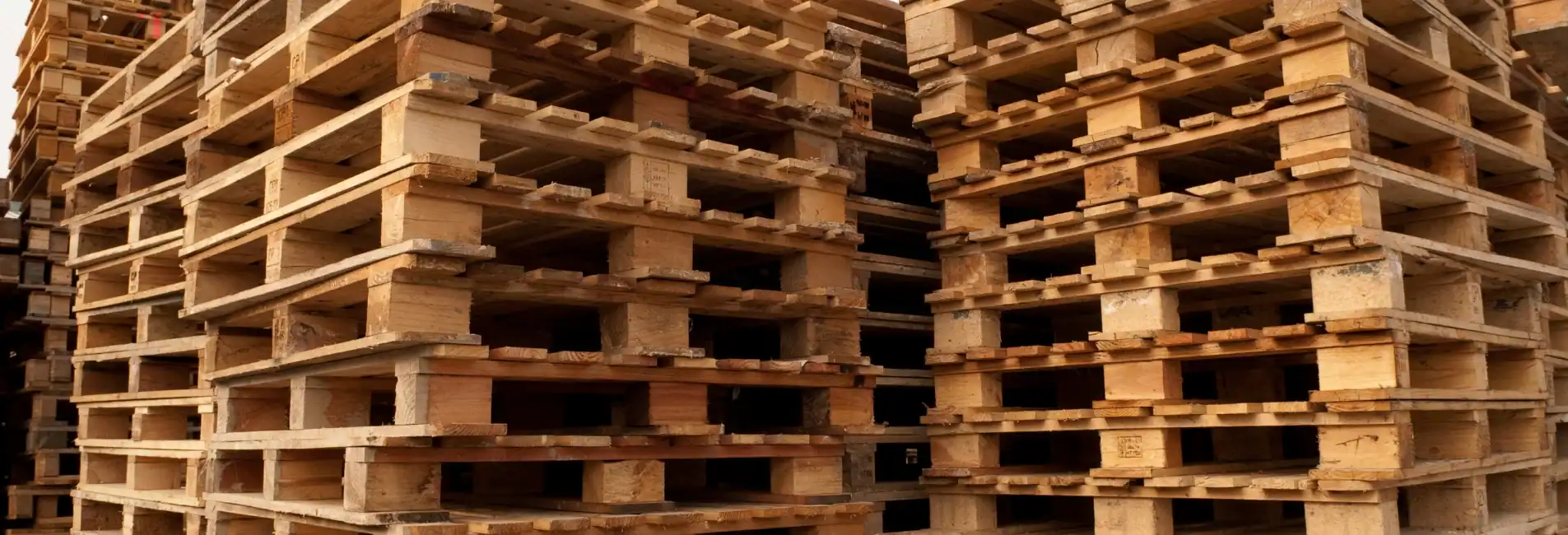
Not all pallets are created equal, and we grade them based on condition and usability. Standard 48×40 GMA pallets in good shape command the best prices because they’re universally compatible with racking systems and forklifts. Custom sizes have value too, but they’re harder to resell quickly, which affects what you’ll get paid.
Condition matters more than you’d think. A Grade A pallet—structurally sound with minimal damage—can fetch $3 to $8 each depending on market conditions. That’s the difference between a monthly pickup generating $600 or $1,600 if you’re moving 200 pallets. Grade B pallets need minor repairs, so they’re worth less but still buyable. Even Grade C pallets, the ones with broken boards or missing stringers, have value as raw material for recycling.
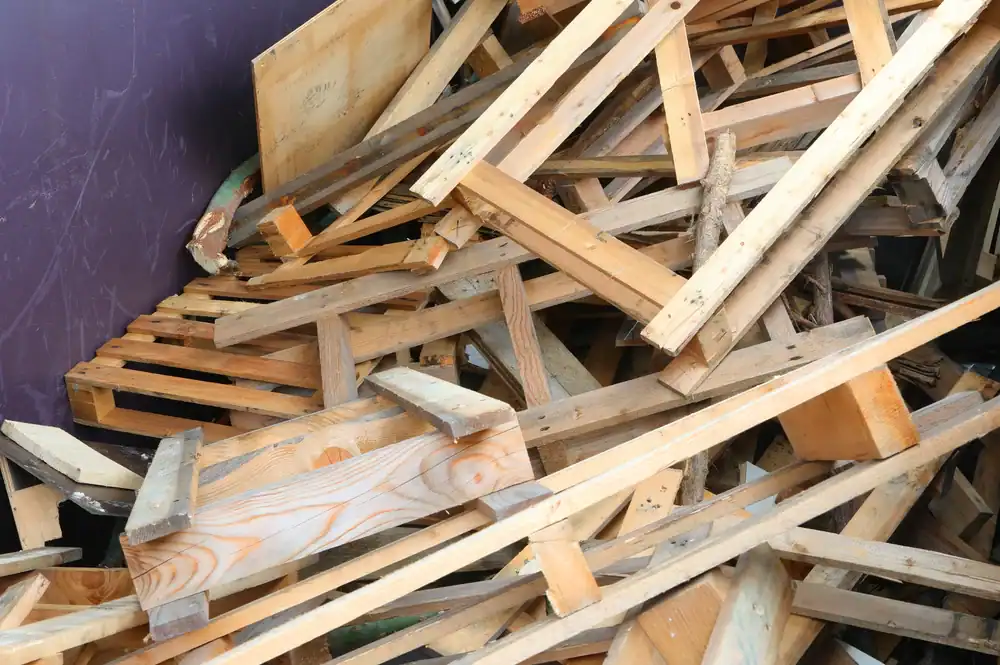
Here’s the part that surprises people: even broken pallets aren’t worthless. They get dismantled, and the usable boards become components for rebuilt pallets. The rest gets chipped into mulch or processed into fuel. You’re not getting paid for scrap wood, but you’re also not paying a disposal fee. That’s still money saved.
The key is understanding what you have before you reach out for a quote. Walk your warehouse and separate pallets by condition. Count how many are in each category. Take a few photos. This speeds up the evaluation process and gets you a more accurate price estimate upfront. We respond within 24 hours with a quote and can schedule pickup within a day or two if you’re ready to move.
One thing to watch: contamination. Pallets exposed to chemicals, oil, or hazardous materials might not qualify for buyback, but we’ll still remove them properly under environmental regulations. You just won’t get paid for those. It’s worth asking about before the truck shows up.
Let’s talk numbers, because that’s what actually matters when you’re evaluating whether this is worth your time. If you’re currently paying for pallet disposal—whether through dumpster rentals, hauling fees, or waste management contracts—you’re already losing money on something that could be generating revenue.
A typical distribution center in Monmouth County, NJ might cycle through 100 to 300 pallets monthly. At the low end, if you’re getting $3 per pallet for 100 units, that’s $300 monthly or $3,600 annually. At the higher end—$8 per pallet for 300 units—you’re looking at $2,400 monthly or $28,800 per year. That’s not pocket change. That’s a meaningful line item that either drains your budget or contributes to it.
Now factor in what you’re currently spending on disposal. Dumpster rentals for wood waste run $50 to $150 per haul depending on volume and frequency. If you’re doing that twice a month, you’re spending $1,200 to $3,600 annually just to throw away something someone else would pay you for. The math is pretty clear.
But the financial benefit goes beyond direct payments. Reclaiming warehouse space has real value, especially if you’re paying $10 to $15 per square foot annually for industrial space in Monmouth County. A stack of 50 pallets takes up roughly 100 square feet. If those pallets sit for months because you don’t have a removal system in place, you’re essentially paying rent to store waste. Clear them out, and that space can hold inventory, equipment, or staging areas that actually contribute to operations.
There’s also the operational efficiency angle. Pallet buildup creates safety hazards—trip risks, fire code violations, blocked egress routes. OSHA fines for safety violations start at $15,625 per incident. One citation wipes out years of pallet revenue. A reliable pickup schedule eliminates that risk entirely while keeping your facility compliant and functional.
Some businesses worry about the time investment required to coordinate pickups and sort pallets. In practice, it’s minimal. We offer drop trailer programs where we leave an empty trailer on-site for a week or two. Your team fills it as pallets accumulate, then we swap it out on a scheduled basis. You’re not coordinating logistics every time you need a pickup—you’re just loading a trailer that’s already there.
The circular economy model works because it aligns financial incentives. We need a steady supply of pallets to repair and resell. You need those pallets gone and you’d prefer to get paid for them. The transaction benefits both parties, and it keeps thousands of pounds of wood out of landfills in the process. That’s not altruism—it’s just smart business.
Want live answers?
Connect with a Pallet Kings expert for fast, friendly support.
You’re probably wondering what happens between “I have pallets” and “I get paid.” The process is more straightforward than most logistics operations, but there are steps worth understanding so you know what to expect.
First, you contact us and provide basic details: how many pallets you have, what condition they’re in, and where you’re located in Monmouth County, NJ. We ask for photos at this stage to assess quality and provide an accurate quote. This isn’t us being picky; it’s us making sure the truck we send can handle your volume and that our pricing reflects what you actually have.
Within 24 to 48 hours, you’ll get a quote. This tells you what you’ll be paid per pallet (if anything), whether pickup is free, and when we can schedule a truck. For bulk loads of 50 or more pallets, pickup is almost always free. Smaller quantities might incur a trucking fee of $50 to $150, but you can avoid that by accumulating pallets for a few months until you hit the minimum threshold.
On pickup day, our team arrives with a truck or trailer and starts loading. If you’ve presorted pallets by condition, this goes faster. If not, we’ll do a quick visual inspection on-site to separate reusable pallets from scrap. This is where the grading happens in real-time.
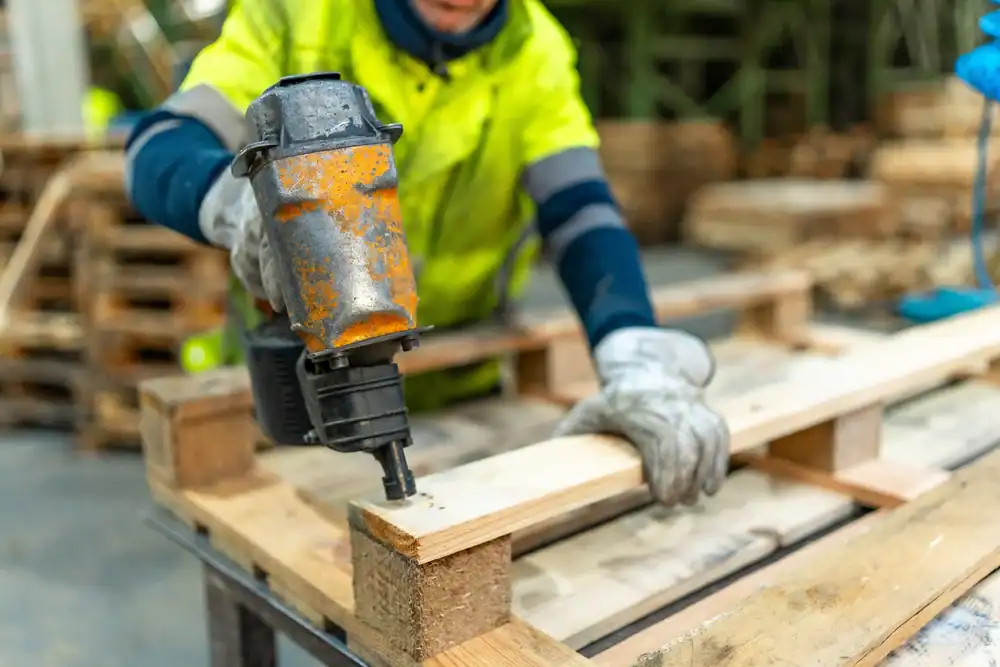
Grade A pallets—the ones in great shape—get loaded first. These are headed straight to inspection and resale. Grade B pallets, which need minor repairs, go next. They’ll hit the repair shop before being reconditioned and sold. Grade C pallets, the broken ones, get loaded last. These are destined for disassembly, with usable boards salvaged and the rest processed into mulch or biomass fuel.
The whole process usually takes 30 minutes to an hour depending on volume and how organized your pallet storage is. You don’t need to do anything except make sure the pallets are accessible and that the truck has a clear path for loading. We bring our own equipment—forklifts, pallet jacks, whatever’s needed—so you’re not tying up your team or your machinery.
Once the truck is loaded, you get a bill of lading that documents what was picked up. This matters for two reasons: it’s your proof of pickup for internal tracking, and it’s the basis for payment if you’re selling pallets. We pay on the spot if the quantity is small and the quality is obvious. Larger loads typically get processed first, then you receive payment within a few days via check or direct deposit.
Here’s something worth noting: we provide documentation for sustainability reporting. If your company tracks waste diversion, carbon footprint, or ESG metrics, you’ll get certificates showing how many pallets were recycled, how much wood was kept out of landfills, and the environmental impact of your participation. This isn’t just paperwork—it’s proof that your sustainability claims are backed by actual data.
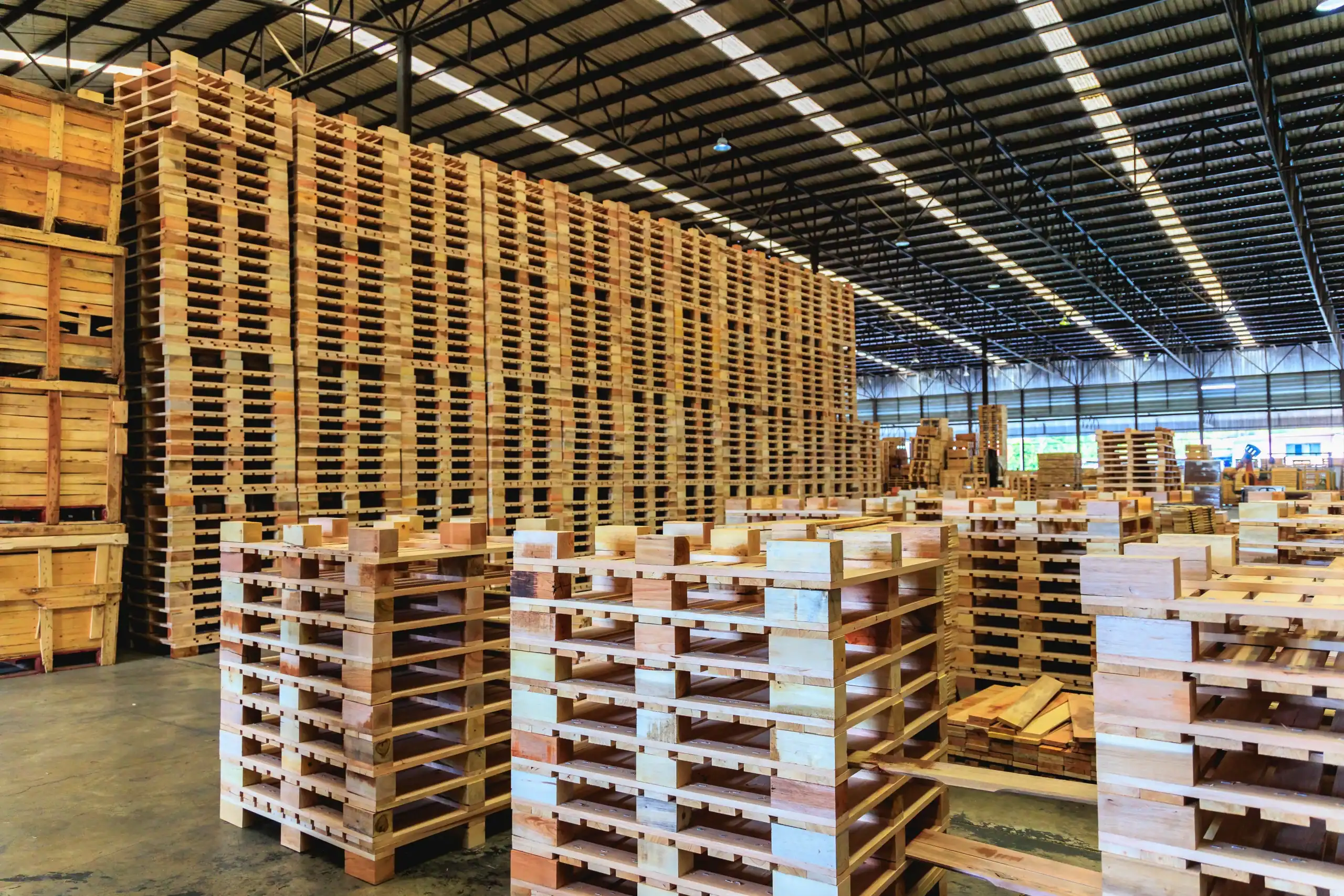
The back-end process is where the circular economy really kicks in. Grade A pallets get inspected, cleaned if necessary, and resold to businesses that need them. Grade B pallets go through repair—broken boards get replaced, loose nails get hammered, and they’re essentially rebuilt to meet quality standards. These reconditioned pallets often perform as well as new ones but cost 30% to 50% less, which is why there’s steady demand for them.
Grade C pallets get dismantled. Usable boards become raw material for building other pallets. The rest—wood that’s too damaged or contaminated—gets chipped into mulch for landscaping or processed into biomass fuel for industrial kilns and power generation. Even the metal components, like nails and banding, get sorted and sent to scrap metal recyclers. The goal is zero landfill waste, and we hit that target consistently.

How often you schedule pickups depends entirely on your pallet generation rate and available storage space. High-volume operations—distribution centers, manufacturers, large retailers—typically need monthly or even bi-weekly pickups to stay ahead of accumulation. Lower-volume businesses can get away with quarterly pickups, especially if they have space to store pallets without disrupting operations.
The sweet spot for most businesses is setting up a regular schedule rather than calling for one-off pickups. We prefer predictable volume because it helps us plan routes and allocate trucks efficiently. You benefit because you’re not scrambling to find someone when pallets start piling up. It’s one less thing to manage.
Drop trailer programs solve this problem elegantly. We leave an empty trailer at your facility for a set period—usually one to four weeks. Your team loads it as pallets accumulate, and we swap it out on a predetermined schedule. You’re not waiting for a truck to show up; you’re just filling a trailer that’s already there. This works especially well for businesses with inconsistent pallet generation or limited dock access.
Some businesses worry about minimum quantities making regular pickups impractical. If you’re only generating 20 to 30 pallets monthly, you’re below the typical 50-pallet minimum for free pickup. The solution is simple: store pallets for two or three months until you hit the threshold. Most warehouses can spare 100 square feet for a few months, and the payoff is free pickup plus payment for the pallets. You’re not losing anything by waiting.
Emergency pickups are available if you absolutely need pallets gone immediately—facility cleanouts, lease expirations, surprise inspections. We can accommodate same-day or next-day service for urgent situations, though there might be a premium for short notice. It’s not the most cost-effective option, but it’s there if you need it.
One last consideration: seasonal fluctuations. Retail and e-commerce businesses see pallet volume spike during Q4 holiday season. Manufacturing operations might have busy periods tied to production cycles. If you know your high-volume months in advance, communicate that to us. We can adjust pickup frequency temporarily to match your needs, then scale back during slower periods. Flexibility goes both ways.
The pallet recycling model works because it solves multiple problems at once. You reclaim warehouse space, eliminate disposal costs, generate revenue from something you’d otherwise throw away, and contribute to a circular economy that keeps materials in use instead of in landfills. It’s not a complicated decision when you look at the numbers.
Businesses across Monmouth County, NJ are already doing this. The ones who’ve been in buyback programs for years aren’t doing it for sustainability points—they’re doing it because it makes financial sense and simplifies operations. The environmental benefit is real, but it’s a bonus, not the primary driver.
If you’re sitting on pallets right now, wondering what to do with them, the answer is pretty straightforward. Count what you have, take a few photos, and reach out to Pallet Kings LLC for a quote. You’ll know within a day what your pallets are worth and when they can be picked up. From there, it’s just a matter of scheduling the truck and clearing the space.
Summary:
Share: